01 — UNDERSTAND
What is actually happening?
We slow down and understand the situations, thoughts and emotions behind what you're experiencing.


Anxiety. Overthinking. Relationship struggles. Emotional stress. Sometimes you don't need another piece of advice. You need someone who can help you understand what's really happening.
I'm Abhinay Varayogi — counselor and mental health coach.
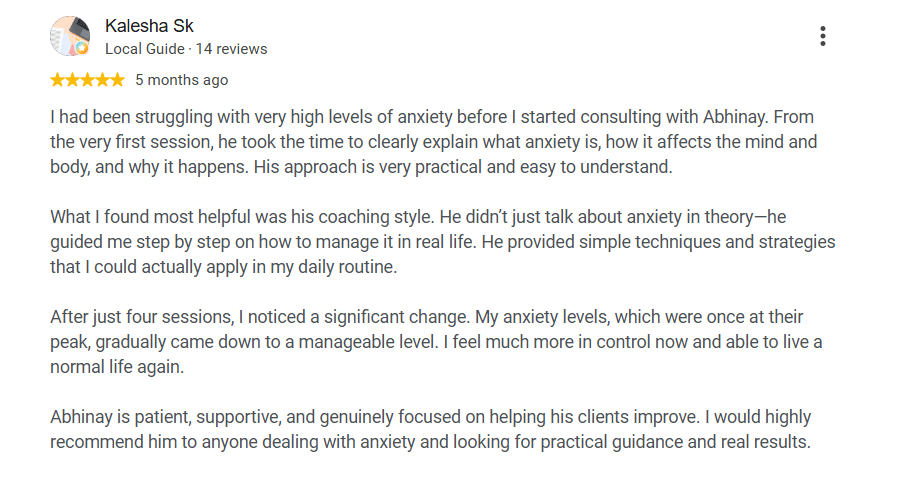
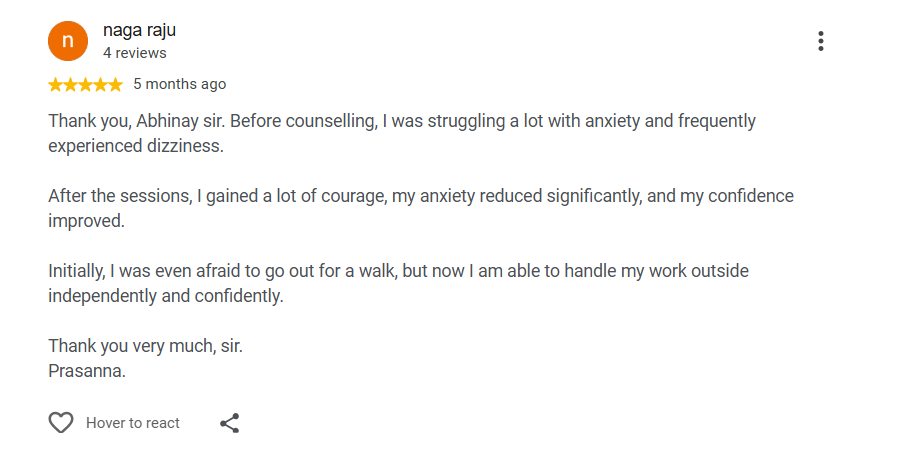
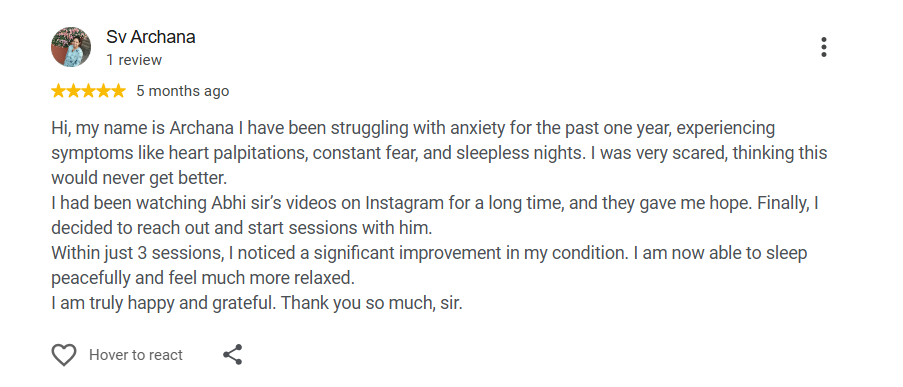
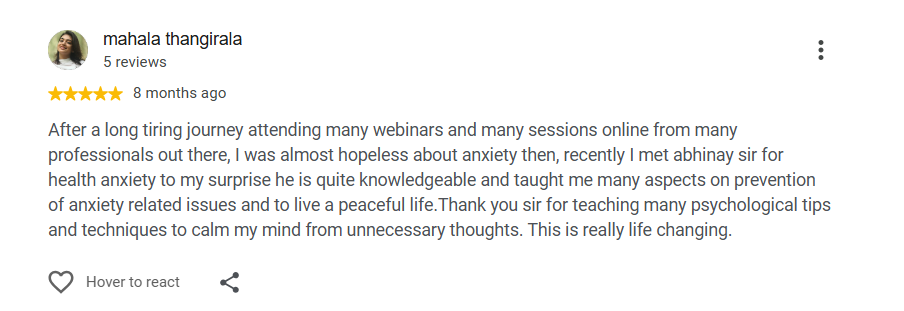
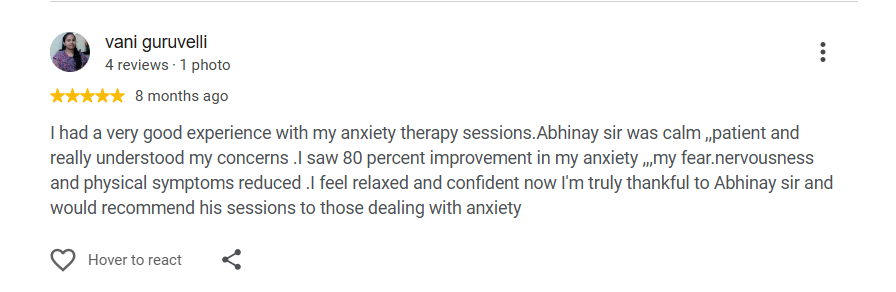
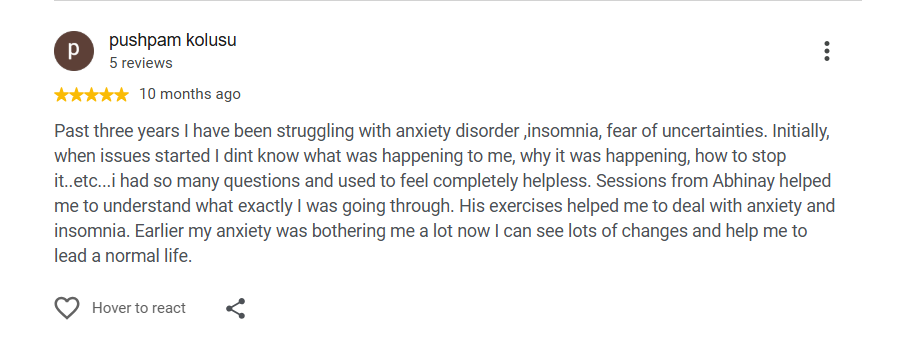
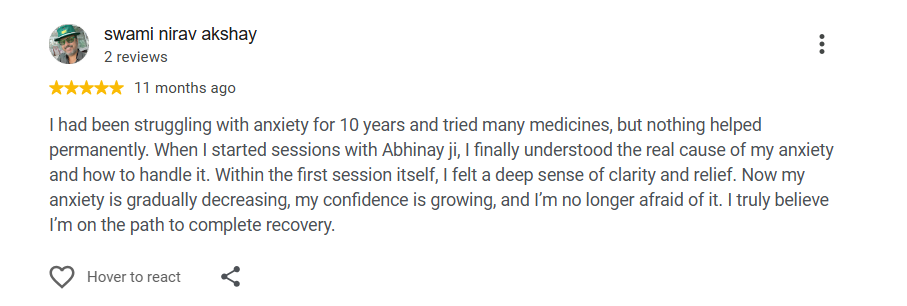
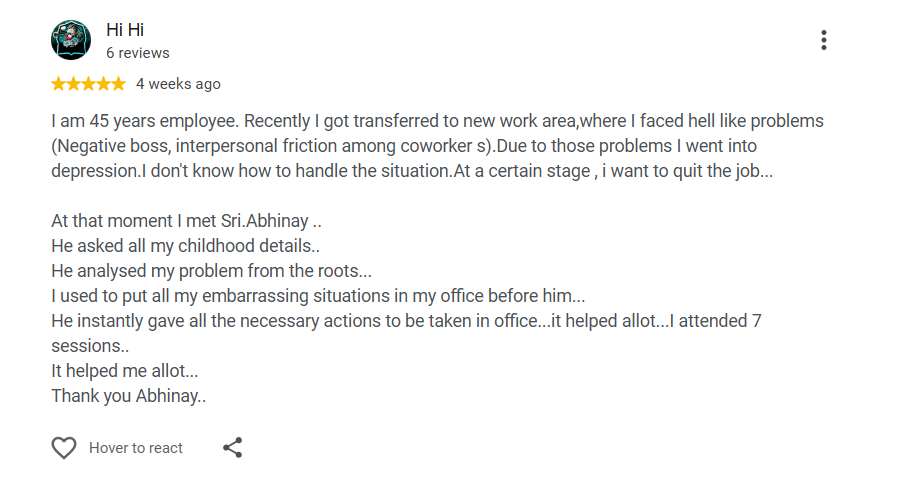
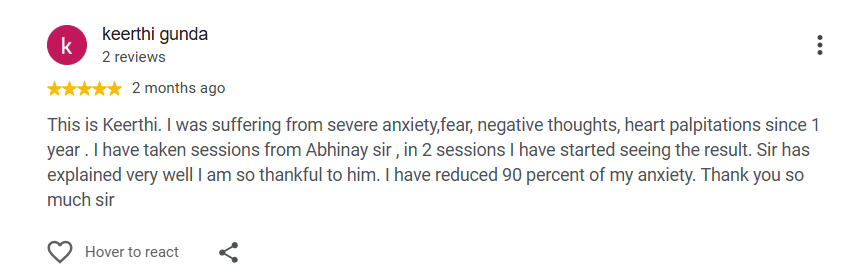
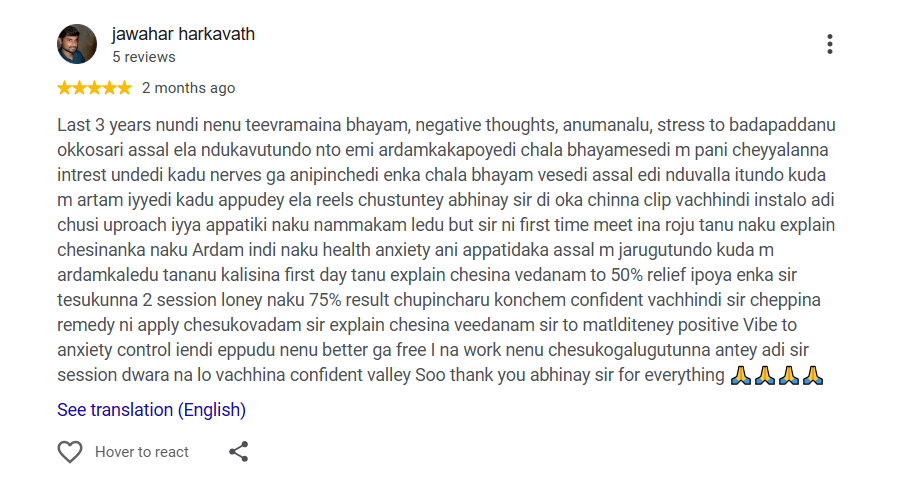

Before we talk about fixing the problem, let's understand it.
Maybe you know exactly what's bothering you. Maybe you only know that you're tired of feeling this way.
You don't need the perfect words. You don't need a diagnosis. And you don't need to have everything figured out before you ask for support.
The first conversation is simply a place to slow down, talk openly, and understand what may be going on.
The work is not about giving you a list of things you “should” do. It's about understanding patterns and building skills you can carry into everyday life.
I'm Abhinay Varayogi, a counselor and mental health coach with 7+ years of experience supporting people through emotional and personal challenges.
Cognitive Behavioural Therapy (CBT)
Understand your thoughts. Change your patterns.
CBT helps you understand the connection between your thoughts, emotions and behaviours. It helps identify negative thinking and behavioural patterns and replace them with healthier responses.
Depending on your needs, CBT may include cognitive restructuring, behavioural techniques and exposure-based approaches such as ERP.
It is commonly used for anxiety, depression, overthinking, OCD and emotional difficulties.
Dialectical Behaviour Therapy (DBT)
Learn to manage emotions, handle distress and respond better.
DBT focuses on mindfulness, emotional regulation, distress tolerance and interpersonal effectiveness.
It helps you understand your emotions, stay calm during difficult situations and develop healthier ways to respond instead of reacting impulsively.
DBT can be particularly helpful for emotional overwhelm, anxiety, anger, relationship difficulties and emotional instability.
Together, CBT & DBT
CBT helps you change unhelpful thought and behaviour patterns.
DBT helps you manage the emotions behind them.
Together, they provide practical tools to help you think differently, regulate emotions and respond with greater control.
Since 2018, I have worked with 500+ individuals, helping them understand their thoughts, emotions, behaviors and relationship patterns.
Every person brings a different story. So I don't believe in forcing everyone through the same formula.
Racing thoughts, constant worry, fear about what might happen, difficulty switching your mind off, or feeling mentally exhausted.
Recurring arguments, communication difficulties, emotional distance, trust concerns, or feeling like the same problems keep repeating.
Feeling overwhelmed, drained, irritable, stuck, or unable to respond to situations in the way you want to.
Difficulty moving on, attachment, loneliness, repeated thoughts about an ex, or finding it hard to rebuild your emotional balance.
Strong reactions, regret after arguments, self-doubt, fear of judgment, people-pleasing, or negative self-talk.
Our conversations are tailored to your concerns and goals. Depending on your situation, we may work with thoughts, emotions, behaviors, relationships, experiences and coping patterns.
We slow down and understand the situations, thoughts and emotions behind what you're experiencing.
We identify recurring patterns and the beliefs, habits or reactions that may be maintaining the problem.
We work on practical strategies you can use outside the session, not just insights that stay inside it.
You can start with the one thing that's been bothering you the most. I'll help guide the conversation from there.
In your own words. No need to prepare a perfect explanation.
We look at the patterns and concerns that seem most important.
I'll explain what I understand and what support could look like.
There is no obligation to continue simply because you've had the conversation.
Start with a free 20-minute assessment. If you decide you'd like to continue, choose the consultation format that feels most comfortable for you.
That's exactly what the free 20-minute assessment is for. Talk first, ask your questions, then decide.
You don't need to know exactly what you need before reaching out. You don't need the right words. You don't need to promise yourself that everything will change.
Just tell me what's been bothering you.
The first 20-minute assessment is a chance to talk, ask questions and understand whether continued support may be appropriate.
Share only the basics. I'll get in touch with you.
It's a short conversation to understand what you're experiencing, answer your questions, and discuss whether continued support may be appropriate.
No. You can start with what you've noticed recently. The conversation can help clarify what may be going on.
The purpose is to understand your experience in a private and non-judgmental setting.
No. You can decide whether you would like to continue after the initial conversation.
Sessions are intended to provide a private and confidential environment, subject to applicable professional and legal limitations.
Yes. Online one-on-one sessions are available.
You don't have to know where the conversation will lead. You only need to decide whether you're ready to start it.
Start a Conversation →